Jump to content


Photo
- - - - -

The CanAm chevy BB rides again - sort of.


  • Please log in to reply
3 replies to this topic

#1 mariner

mariner
  • Member

  • 2,460 posts
  • Joined: January 07

Posted 19 February 2026 - 11:19

Back in those wonderful CanAm days an alloy Chevy Big Block was essential until Porsche came along.


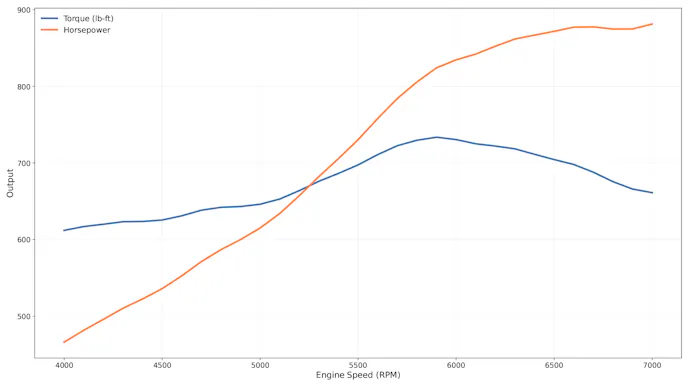
Here si "hobby" build of 565 c.i.BBC  that wil with today's knowhow prduce 850 bhp - as high aCaAm ever got 


https://www.enginela... 2/13/26 (Copy)


It is intersting that he chose low deck block to get the CG down. .


Advertisement

#2 Bob Riebe

Bob Riebe
  • Member

  • 3,344 posts
  • Joined: January 05

Posted 19 February 2026 - 18:12

          Even with today's myriad deck heights today, I still found it amazing that they called that a standard deck height low.

Back in the day, that was the deck height available except for some truck Chevy big blocks.

I like that the block and heads do represent what would have been around back in the Can-Am days kinda-sorta.


           I am rereading my life history  book/s of Smokey Yunick, he wrote (Amazing it is over 20 years old now) and since he started working/creating race cars back in the days

there was zero to minimal, high performance parts available, he said who were/are the best racing equipment makers and when they came to be.

It makes me wonder why, or if, what were the leading companies used, for decades, by race engine builders are no longer as good as they once were

or other reason have made them , actually, quite rare, in engine builds nowadays . -- (Jahns', Wiseco pistons - Carillo connecting rods) 

Smokey spoke  that Carrillo was simply the best, (and this is at the turn of the century)  and said nothing, any where, compared to ARP rod bolts.


          Brodix and Air Flow Reasearch are names that have been OFTEN mentioned over the decades when engine builds/ers are using what they think are best.

Nowadays vintage Can-Am races cars are , unless they deliberately  want less, using engine of 800 or horsepower.  Back in the day there were very wide tires 

available to help keep the rubber on the road and not wasted in tire smoke.


I wonder what is available today as new compounds , and sizes, for such thing are not being developed every year as it was back in the day.

I guess Goodyear still makes tires for vintage use, with only Avon and Hoosier now still selling race tires for the old Can-Am cars.

I do not think the huge tires used by the IMSA AAGT and SCCA Cat. II Trans-Am cars are around any more.



#3 Bob Riebe

Bob Riebe
  • Member

  • 3,344 posts
  • Joined: January 05

Posted 25 February 2026 - 18:57

Back in those wonderful CanAm days an alloy Chevy Big Block was essential until Porsche came along.


Here si "hobby" build of 565 c.i.BBC  that wil with today's knowhow prduce 850 bhp - as high aCaAm ever got 


https://www.enginela... 2/13/26 (Copy)


It is intersting that he chose low deck block to get the CG down. .


                prestige-motorsports-lightweight-aluminu


               prestige-motorsports-lightweight-aluminu

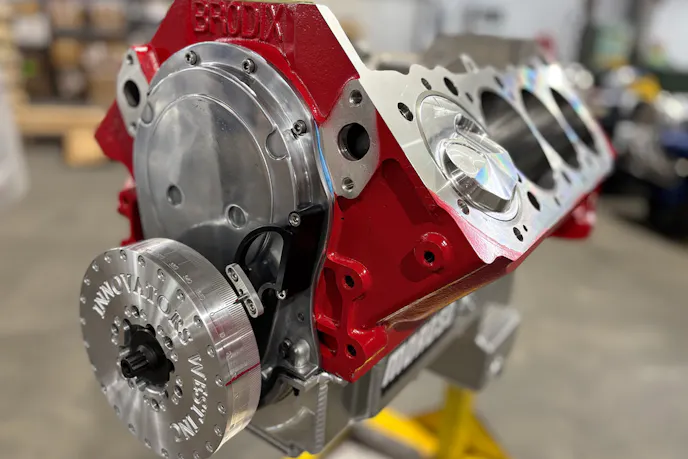
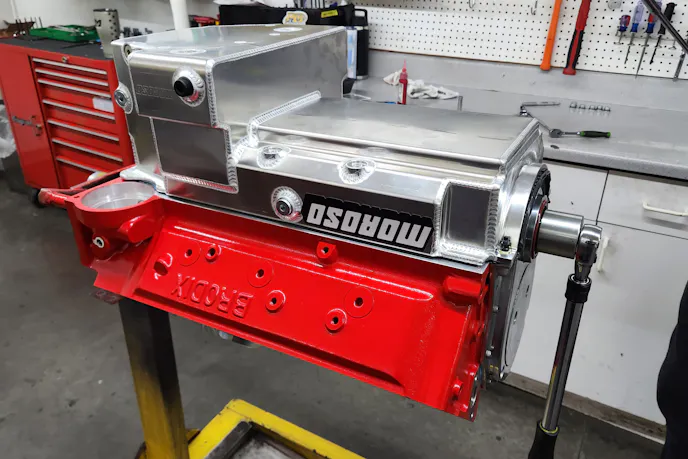
Prestige went with Moroso to fabricate an oil pan that could handle the extra stroke but also fit properly in LaDuke’s Nova. The eight-inch deep rear sump allows for plenty of oil capacity at seven quarts. (Right) The finished short block. A thick aluminum timing cover eliminates flex so the camshaft endplay stays exactly where the builder wants it. They also chose to use one of Innovators West’s aluminum harmonic dampers, which work very well while also cutting weight on the nose of the crankshaft. Finally, a billet timing pointer provides an extra bit of provision when dialing in the ignition timing.


             prestige-motorsports-lightweight-aluminu


#4 mariner

mariner
  • Member

  • 2,460 posts
  • Joined: January 07

Posted 27 February 2026 - 11:22

I actually run a BBC in my "toy car". It isa genV 502 block with a 3.75 L88 style  type crank for "only " 477 CI .


It is obviously heavy about 600lb / 270kg. 


It has a dry sump sysem so the crank centreline is 8"/200mm above the car floor. That gives one advantage of a low CG because all the real weight is in the block and crank. Everything above the block deck is alumiuim  and no quad cams etc. to add high up weigt. 


If you mount such an engine well back in a rear wheel drive set up its CG is close to the wheelbase midpoint , abut 12"/300m in my case so the engines centre of gravity doesnt ride up and down with pitch as in a front engine, or fully rear engine lie a Porsche 911. 


In othe words the pitch "dumbell effect is minimised.


Edited by mariner, 27 February 2026 - 11:23.