Jump to content


Photo
- - - - -

Could AI have "invented" ground effects?


  • Please log in to reply
55 replies to this topic

#1 mariner

mariner
  • Member

  • 2,460 posts
  • Joined: January 07

Posted 18 June 2025 - 09:45

AI does seem to making real progress now. I am sure there is a lot of hype and consultantese but a recent  business survey suggests it is now affecting job hiring. It's abilty to produce original images and short videos from word inputs  is already impressive.


That led me to a thought  - could AI have come up with race car ground effects?


On the one hand NO becuase GE was a truly innovative idea from not just Colin Chapman but Peter Wright and all the guys who worked on it i.e human collaboration. That includes the sliding skirts on the L79 but not on the L78.


However Peter Wright has often pointed out that GE is a natural phononoma and so wasn't " invented" but harnessed. He adds to that if it is natural you can't ban it!


So if GE was just harnessing something that was identified in prior scientific work why wouuldn't AI be able to come up with it as solutuon?


I don't know the answer but it is an interesting question I think.


Advertisement

#2 Bloggsworth

Bloggsworth
  • Member

  • 9,580 posts
  • Joined: April 07

Posted 18 June 2025 - 16:46

It's not even moot - it's already here. "Porpoising" has existed for centuries, it's how reeds work in woodwind instuments, the rapid close and release of the reed produces the vibrations which create the musical notes. There is very little new under the sun...


#3 gruntguru

gruntguru
  • Member

  • 7,765 posts
  • Joined: January 09

Posted 19 June 2025 - 00:58

In general - "AI" can do anything a human brain can do.

To be more specific, particular categories and levels of AI have varying levels of capability. For example:

  • The chat GPT large language model would probably not be capable of finding that application for GE by itself. 
  • Artificial General Intelligence (even at current levels of sophistication) would almost certainly discover GE if given the problem of maximising downforce on a racecar. Given the initial conditions and some CFD tools, the application of GE to a racecar would be discovered by AGI quite quickly.


GE has been utilised for millions of years - e.g. by birds during "skimming" flight or landing.


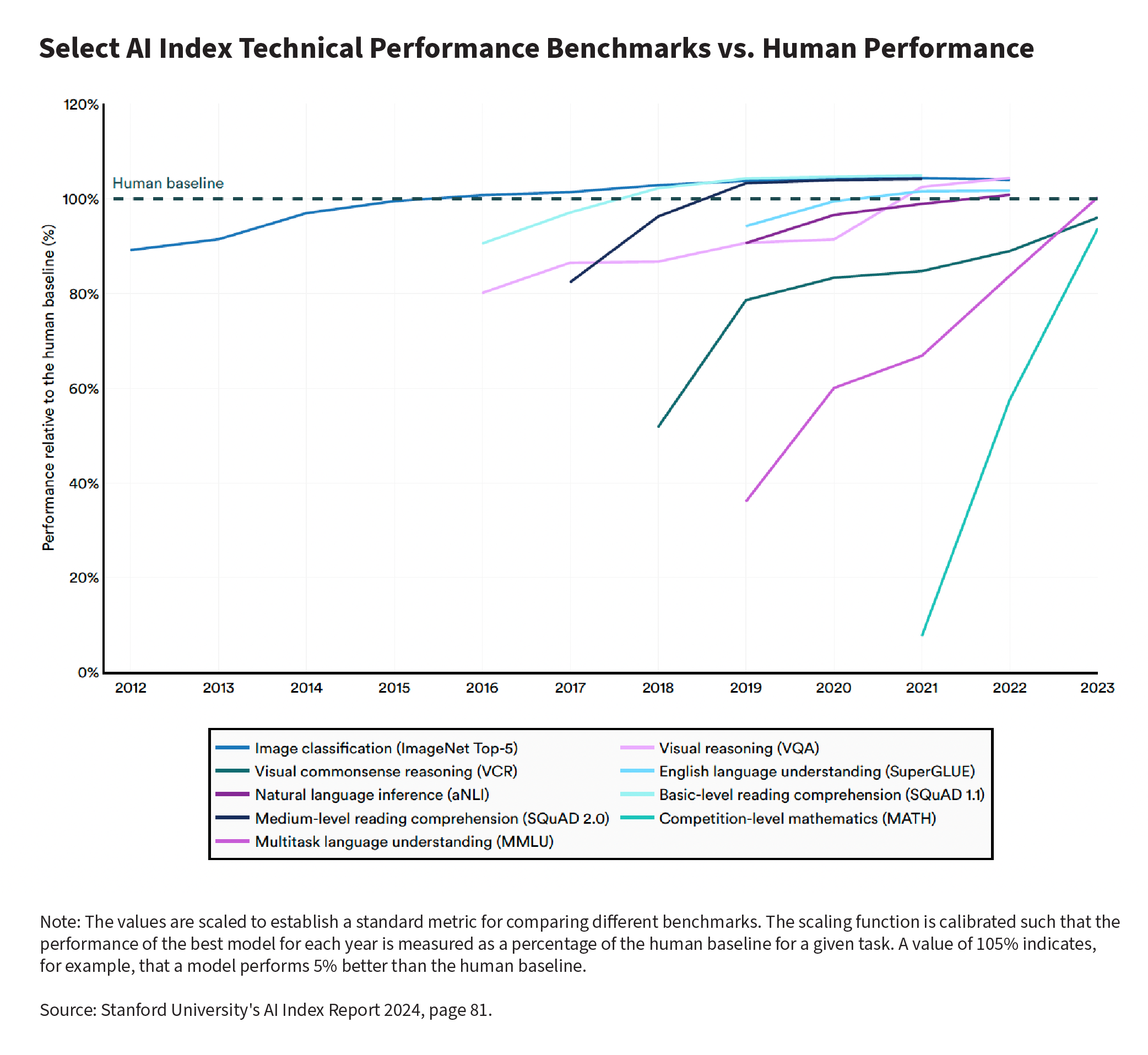
Edited by gruntguru, 19 June 2025 - 01:00.


#4 Risil

Risil
  • Administrator

  • 74,304 posts
  • Joined: February 07

Posted 19 June 2025 - 14:15

My understanding with ground effects was that March were experimenting with venturi tunnels under the car in the early seventies -- i.e. almost as soon as teams started running with aerofoils. But they didn't have the time or expertise or materials to properly seal off the underfloor area? So the aerodynamic principles underpinning the design were known, but crucial conditions to translate them into laptime were missing.


As for AI -- it would have struggled given the state of how many copyrighted technical works had been digitized by 1976. Which as we know are the raw material the LLMs run on.


I also wonder, idly, whether AI might've come up with the Lotus 88 double chassis design.


#5 Sterzo

Sterzo
  • Member

  • 7,890 posts
  • Joined: September 11

Posted 19 June 2025 - 16:42

My understanding with ground effects was that March were experimenting with venturi tunnels under the car in the early seventies -- i.e. almost as soon as teams started running with aerofoils. But they didn't have the time or expertise or materials to properly seal off the underfloor area? So the aerodynamic principles underpinning the design were known, but crucial conditions to translate them into laptime were missing.

Yes, the March 701 with its aerofoil side-pods was an attempt at using ground effects. It followed experiments which had been taking place at B.R.M. Also - with apologies for being terribly vague - weren't some Indycar teams adjusting rake angle, having found it could have an effect on grip levels. 


#6 Greg Locock

Greg Locock
  • Member

  • 6,552 posts
  • Joined: March 03

Posted 19 June 2025 - 20:22

There is a formal (and very boring) process for invention called TRIZ. I imagine you could train an LLM up on that. I think getting from a clarinet's reed to GE might be a bit of a stretch tho.


#7 gruntguru

gruntguru
  • Member

  • 7,765 posts
  • Joined: January 09

Posted 20 June 2025 - 00:24

Could AI invent the use of ground effect aerodynamics on racing cars"


Copilot

AI could certainly rediscover or optimize the use of ground effect aerodynamics in racing cars, but it’s unlikely that AI would have been the first to invent it without human input—especially given the historical and contextual nature of its original development.


Here’s how to think about it:


What Is Ground Effect in Racing?

Ground effect refers to the aerodynamic principle where a car’s shape and proximity to the ground create a low-pressure zone underneath, effectively “sucking” the car to the track. This increases downforce without adding drag, improving grip and cornering speed.


It was famously exploited in Formula 1 in the late 1970s, particularly by the Lotus 78 and 79 designed by Colin Chapman’s team.


Could AI Have Invented It?

In theory, yes—if given the right tools and goals, AI could:


Simulate airflow under various car body shapes.

Optimize for maximum downforce and minimal drag.

Discover that certain underbody shapes (like venturi tunnels) produce ground effect.

But here’s the catch:


AI needs data, goals, and constraints. Without being told to optimize for downforce or simulate airflow near the ground, it wouldn’t “spontaneously” invent ground effect.

The original discovery involved intuition, experimentation, and rule-bending—things AI can mimic but not originate without direction.

✅ What AI Can Do Today

Modern AI and machine learning are already used in motorsport to:


Optimize aerodynamic designs using CFD (computational fluid dynamics).

Analyze telemetry and tire data for performance gains.

Simulate race strategies and pit stops.

AI could now refine ground effect designs far beyond what was possible in the 1970s, especially with tools like generative design and reinforcement learning.


#8 Beri

Beri
  • Member

  • 17,265 posts
  • Joined: January 14

Posted 24 June 2025 - 09:54

It's not even moot - it's already here. "Porpoising" has existed for centuries, it's how reeds work in woodwind instuments, the rapid close and release of the reed produces the vibrations which create the musical notes. There is very little new under the sun...


Yet AI is a learning entity. It might, at the moment, not hold any solution to said problems. But it is guaranteed that one day it will. Thats the true strength always, even with humans; to learn from mistakes. But AI will do it much faster. The only issue being; AI need to learn it is wrong and in the end it needs human interaction to validate solutions. As AI cant know if AI itself is right. Which is the only limitating factor, the human interaction, that would hold back its velocity in problem solving the mentioned case.


Edited by Beri, 24 June 2025 - 09:55.


#9 mariner

mariner
  • Member

  • 2,460 posts
  • Joined: January 07

Posted 25 June 2025 - 15:01

I think that, as used in modern F1 the AI models are fairly well bounded as most impriovements are marginal and the rules reign supreme.


That is a bit different from "inventing" GE where it was a largely external process. seeking an entirely novel solution.


Also "inventing" something new in racing rquires not just tehe concept but validation against the rules and how they might be interpreted. Both theh Brabham fan car and the Lotus 88 failed on that point. however loigical they were .


BTW If you want to realy worry yourself about AI this reearsch paprer should do it 


https://www.anthropi...ic-misalignment


#10 Charlieman

Charlieman
  • Member

  • 2,642 posts
  • Joined: October 09

Posted 27 June 2025 - 08:58

I read some quotes from Gordon Murray the other day about his experiments with underfloor aerodynamics with the Brabham BT44 and successors. He knew that he was getting worthwhile downforce but didn't know what other teams were trying at the time. More or less concurrently, McLaren experimented with rigid skirts on the M23. However only Peter Wright and a few close colleagues had conducted the right wind tunnel experiments which led to ground effects -- forty years after Auto Union's trials with their speed record cars.


The question whether AI could have come up with ground effects is therefore about knowledge of prior art versus creativity. Could it have connected information which was in the public domain, but which needed an imaginative leap to design an experiment?


#11 gruntguru

gruntguru
  • Member

  • 7,765 posts
  • Joined: January 09

Posted 29 June 2025 - 01:02

Clearly AI has access to all the modern tools (CFD, parametric case studies). If you gave it the initial conditions (open wheel race car with dimensional constraints operating on a road surface) and asked it to maximise L/D, GE would be a major part of the optimised solution.


#12 cbo

cbo
  • Member

  • 1,076 posts
  • Joined: September 21

Posted 06 July 2025 - 16:31

AI can't invent anything. It is completely dependent on knowledge already produced and a human to pose the question and put limits on the material it can use.

I have yet to see AI being able to discern between a reliable source and data provided by some guy named Bob on the interweb.

Hiring Adrian Newey to figure out your aerodynamics would be faster and cheaper than waiting for the 10.000.000 monkeys inside AI to come up with a usefull answer.

#13 gruntguru

gruntguru
  • Member

  • 7,765 posts
  • Joined: January 09

Posted 09 July 2025 - 01:18

AI can't invent anything.


AI can already do most things a human brain can do. Eventually it will be able to do everything a human brain can do - and more.


(Not talking about Chat GPT or CoPilot here)


#14 cbo

cbo
  • Member

  • 1,076 posts
  • Joined: September 21

Posted 09 July 2025 - 16:04

AI can already do most things a human brain can do. Eventually it will be able to do everything a human brain can do - and more.

(Not talking about Chat GPT or CoPilot here)


Perhaps - but nothing I've seen or heard suggest that to be a fact.

The brain of a field mouse can probably do 90+ percent of what a human brain can do...

#15 gruntguru

gruntguru
  • Member

  • 7,765 posts
  • Joined: January 09

Posted 09 July 2025 - 23:23

Perhaps - but nothing I've seen or heard suggest that to be a fact.


Where have you been looking?

Alan Turing was predicting human level AI in 1950. The majority of experts in the field now agree with him. A few examples:


1. Geoffrey Hinton ("Godfather of AI")

  • Believes AI will inevitably surpass human intelligence.
  • Says there's a "significant chance" AI could take control if not properly regulated.
  • Claims that "almost everybody I know who is an expert on AI believes that they will exceed human intelligence — it's just a question of when"

2. Demis Hassabis (CEO, Google DeepMind)

  • Predicts Artificial General Intelligence (AGI) could arrive in 5–10 years (by 2030–2035).
  • Emphasizes AGI’s potential to revolutionize fields like healthcare and science.

3. Sam Altman (CEO, OpenAI)

  • Suggests AGI might arrive as early as 2025, though this is considered optimistic by many.

4. Broader Expert Surveys

  • A 2024 survey of AI researchers found a 50% chance of AGI by 2040, with some predicting as early as 2032.
  • The AI Doomsday Clock project aggregates predictions and shows a convergence around 2029–2035 for AGI 


https://www.youtube....h?v=uMwjKyAPR34


Edited by gruntguru, 10 July 2025 - 06:47.


#16 7MGTEsup

7MGTEsup
  • Member

  • 3,147 posts
  • Joined: March 11

Posted 11 July 2025 - 10:57

So James Cameron was out by 35 - 45 years.


Edited by 7MGTEsup, 11 July 2025 - 10:57.


#17 Michael Ferner

Michael Ferner
  • Member

  • 7,559 posts
  • Joined: November 09

Posted 29 July 2025 - 10:19

Given that intelligence is basically applied memory, it's not much of a question whether machines will eventually outperform humans. The hard question behind that is whether the functionality of the human brain is based on the laws of physics, or dependent on a whiff of spiritual input which is usually called "soul", and it was historically one of the main objects of the research done by Turing et al to prove the former.


But it doesn't stop there: the gist of the question in the OP is more about creativity than intelligence, though both are tightly connected with each other, naturally. But it is not the same: a creative person (like an artist, for example) is usually intelligent, but not necessarily so, the same as an intelligent person is not necessarily creative. A machine will always outperform humans in containing and assessing memory, once it is properly trained to do that, but will that be enough to be creative? A human trait that is often overlooked in this context is FORGETTING! Humans (and animals too, to a degree) are masters of forgetting menial things in order to concentrate on important matters, and the act of forgetting is as fascinating as is the act of memorizing things (and hugely important for the process of learning)! It's probably more than just a notion that dreams play a fundamental role in the process of forgetting, and it's also not really surprising to find many connections between dreaming and creativity. So, until the time that AGI learns how to dream, I wouldn't want to write off ole' homo sapiens quite yet...


Edited by Michael Ferner, 29 July 2025 - 12:03.


#18 gruntguru

gruntguru
  • Member

  • 7,765 posts
  • Joined: January 09

Posted 30 July 2025 - 02:10

Hadn't considered "forgetting" previously. No doubt something a smart machine could learn to do.


Now "dreaming" - that needs to happen in some sort of subconscious or resting state??


Edited by gruntguru, 30 July 2025 - 02:10.


#19 Michael Ferner

Michael Ferner
  • Member

  • 7,559 posts
  • Joined: November 09

Posted 30 July 2025 - 08:06

Not necessarily. And the important thing about forgetting is not to merely be able to do it, but how!


I recall that, more than thirty years ago, the 'thing' in brain/memory research seemed to be to use computer analogy to describe functions of the brain - more of a fun thing, I reckon, simply because PCs were around long enough then for everybody to understand their main components and inner logic. I suspect that even back then everybody knew that there are no RAM or Hard Drive sections within the brain, but it served quite well to better illustrate the meaning of topics that were then discussed. The thing that stuck with me, however, was the analogy used between dreams and the Garbage Collection in computer programming, and while dream research has certainly advanced quite a lot in the third of a century since, we still don't have a coherent answer to the question why we dream at all. Perhaps the analogy of the Garbage Collection isn't that far off, and dreams are a means of 'mental housekeeping', to free up memory resources by forgetting the things we don't really need to recall?


The actual act of dreaming is pretty chaotic, as every Human will know pretty well: real life persons and happenings mix with themselves, and with thoughts, images and emotions 'from another world', or so it would seem quite often. Things that have had no connection in real life are suddenly linked with each other, and form bizarre images and sceneries. It is this humungous substrate of memory "waste" that is, very likely, the main source for inspiration or creativity in the human brain. If you ask creative people about where did they get the idea from, you'll often hear stories about 'lateral thinking', or 'thinking outside of the box', like an apple falling from a tree, or the movements of a snake, and SNAP! An image or an idea transcends into another state.


Another source for creativity could be the Default Mode Network, or Default Memory Network: the 'idle state' of the human brain. We actually cannot 'not think', so our brains constantly revolve around things like peripheral perceptions, or sensory loops like earworms etc. when we don't focus on something special. Artificial intelligence doesn't do that, perhaps it should in order to be truly innovative?


Edited by Michael Ferner, 30 July 2025 - 08:31.


Advertisement

#20 gruntguru

gruntguru
  • Member

  • 7,765 posts
  • Joined: January 09

Posted 30 July 2025 - 21:55

. . . . . . when we don't focus on something special. Artificial intelligence doesn't do that, perhaps it should in order to be truly innovative?


Are you sure of that?


#21 Michael Ferner

Michael Ferner
  • Member

  • 7,559 posts
  • Joined: November 09

Posted 31 July 2025 - 06:56

No, but I'd be very surprised if AI developers implemented DMN into their software! How would you do it?


#22 gruntguru

gruntguru
  • Member

  • 7,765 posts
  • Joined: January 09

Posted 03 August 2025 - 02:18

 Increasingly, AI is generating and optimising its own code - no "AI developers" required. It is very difficult to be certain of what AI can and cannot already do and impossible to rule out any future capabilities.


Edited by gruntguru, 03 August 2025 - 02:48.


#23 Michael Ferner

Michael Ferner
  • Member

  • 7,559 posts
  • Joined: November 09

Posted 19 August 2025 - 09:15

 Increasingly, AI is generating and optimising its own code - no "AI developers" required.


Then, we're safe, really. Ever heard of Kurt Gödel's Second Incompleteness Theorem? AI developing itself will invariably lead to self-referential blah blah.


#24 Fenderless

Fenderless
  • Member

  • 1,163 posts
  • Joined: July 25

Posted 19 August 2025 - 20:17

AI can already do most things a human brain can do. Eventually it will be able to do everything a human brain can do - and more.

<snip>

Sure- Eat Cheetos and watch porn flicks.   :lol:


#25 gruntguru

gruntguru
  • Member

  • 7,765 posts
  • Joined: January 09

Posted 20 August 2025 - 01:12

. . . Ever heard of Kurt Gödel's Second Incompleteness Theorem? AI developing itself will invariably lead to self-referential blah blah.


Sorry, but your second sentence is not logically a necessary conclusion arising from the first.


Even if we were to accept Gödel's Second Incompleteness Theorem as a law.


#26 Michael Ferner

Michael Ferner
  • Member

  • 7,559 posts
  • Joined: November 09

Posted 20 August 2025 - 11:57

So, how do you solve the problem of self-reference? By continuing to make sweeping statements?


#27 gruntguru

gruntguru
  • Member

  • 7,765 posts
  • Joined: January 09

Posted 20 August 2025 - 20:51

You haven't even defined a problem, let alone demonstrate that it actually exists or will exist in the future.


#28 NotAPineapple

NotAPineapple
  • Member

  • 985 posts
  • Joined: July 13

Posted 26 August 2025 - 05:17

So, how do you solve the problem of self-reference? By continuing to make sweeping statements?

Humans have been self referencing for generations and I'd say it's worked out pretty well when it comes to inventing things.

#29 MattPete

MattPete
  • Member

  • 3,469 posts
  • Joined: January 00

Posted 07 October 2025 - 02:37

No.


There is no true AI.


People confuse the current generative-AI with artificial intelligence.  There is nothing intelligent about it: it is an automated bullshit artist that will confidently give you an answer, and that answer will likely to be wrong. Unfortunately, people confuse that confidence for competence.


<rant on>

Caveat: I have dabbled in AI for 30+ years, starting with McClelland and Rumelhart's Parallel Distributed Processing (while learning C++), to SOAR, and ACT-R.  A few years ago I had a student ask me to teach them to how to program a convolutional neural network.  I hadn't been paying attention to the latest and greatest for a few years, so I hadn't heard of such a thing, so I had to look it up.  I thought "Bloody hell, I thought of that 20 years ago!  Why didn't I run with it?" Granted, my idea was to train a layer to act like V1/V2, freeze those layers, and train the rest of the network using those frozen layers as the input.  That's basically what the convolutional filter layer does.  I'm rambling, aren't I.....?

</rant off>


Back on topic: AI in 2024-2026 is what blockchain was a few years ago.


Edited by MattPete, 25 November 2025 - 03:12.


#30 MattPete

MattPete
  • Member

  • 3,469 posts
  • Joined: January 00

Posted 07 October 2025 - 02:38

 Increasingly, AI is generating and optimising its own code - no "AI developers" required. It is very difficult to be certain of what AI can and cannot already do and impossible to rule out any future capabilities.


I've seen some of that code.  Monkeys throwing feces, with no underlying understanding, is more like it. Of course, I'm sure a clueless CEO will fire a bunch of programmers and try to replace them with feces throwing AI, with expected results.


#31 Rigoletto

Rigoletto
  • Member

  • 875 posts
  • Joined: February 20

Posted 07 October 2025 - 19:05

AI is good for mathematical theory, but not inventing stuff like ground effects or the next F-duct or blown diffuser. It is limited by its imagination.


But for mathematical theory, I asked it what speeds a bump-draft could reach on an unlimited straight in Monza-spec cars. The answers are interesting. Then ask it to shift gearing ratios accordingly. Then ask it to have an engine with unrestricted rev capability. Have fun.


Edited by Rigoletto, 07 October 2025 - 19:08.


#32 MatsNorway

MatsNorway
  • Member

  • 2,867 posts
  • Joined: December 09

Posted 31 October 2025 - 17:13

Well Ai can do super impressive stuff already. https://www.facebook...309905060398208

I would say that song although the lyrics are not Ai is mighty impressive. 


The limiting factor for judgement is usually that it is nearly always guided by humans. Someone went and told it it likes/dont like what ai have made etc. "change it" again and again. 


The code might be "throwing Feces" to see what sticks, but if you do it a couple million times a second you still get some kind of rapid progress. It could be not so economic tho.. funding is of the charts. And im not sure i would pay a big premium to get what chatgpt currently produces when i ask it. Its not accurate enough. Its "understanding" is limited. It doesnt have eyes to evaluate what it proposes. Which is perhaps the next tier of LLM or "Ai" 


Ask it about compliant mechanisms and it is dreaming pretty hard. As for dreaming while awake, thats "just" schizophrenia with more prefrontal action to keep you interacting with the real world. its off topic, but you need a sweet spot. Weed smokers stop dreaming and get fatigued/slow, lacking in something/energy.


Edited by MatsNorway, 31 October 2025 - 17:26.


#33 Canuck

Canuck
  • Member

  • 2,429 posts
  • Joined: March 05

Posted 01 November 2025 - 16:15

LLMs remain a curiosity. Every time I’ve explored some path with it where I have some subject matter knowledge, it has been flat wrong, or offered solutions that would create nightmare problems or just simply made **** up. It’s not without its uses but thus far I’m not worried about my job beyond that aforementioned idiot upper management who thinks they can save money this way. It’s good at summarizing transcriptions though, I’ll give it that.

#34 Michael Ferner

Michael Ferner
  • Member

  • 7,559 posts
  • Joined: November 09

Posted 12 November 2025 - 10:28

Yes, in a way AI is a misnomer for what is essentially "just" LLM. I have no doubt that LLM is just a step in development, but apart from the initial wow moment when ChatGPT first hit the headlines, it has left me largely unimpressed. The thing is, as I said earlier, intelligence as such is, in essence, applied memory, but the application part of LLM is what is lacking - it's like a prodigious child, which learns to read at three years of age, and then goes on to read the whole library, annoying all adults with precocious blahblah as it doesn't really understand what it's talking about.


The real strength of AI (as in computational neural networks) is pattern recognition, and that's what is at the heart of LLM - it recognizes the patterns of speech or, more precisely, written language, and simulates it. There's definitely a lot of good stuff to come from enhanced pattern recognition, but creativity is possibly not amongst them, as it is about leaving patterns behind, or "crossing" patterns of unrelated subjects. Of course, there could also be underlying patterns to creativity, but if there are science as yet hasn't defined them clearly enough for AI to find them.


#35 Oho

Oho
  • Member

  • 13,326 posts
  • Joined: November 98

Posted 12 November 2025 - 19:51

AI can already do most things a human brain can do. Eventually it will be able to do everything a human brain can do - and more.


Really? Ok, so human brain has about 80 billion neurons with on the mean seven thousand non linear connections each that's ~ 560 *10^12 (56 trillion) non linear connections, the largest AI models are pretty small in comparison. Better yet in AI model bunch of the connections and associated parameters are piece wise linear, clipped at one or the other end or both. So no, even the largest AI models are pretty simple in comparison to human wetware, its just that folks in general are real bad at identifying difficult problems for AI, chess is easy, analyzing complex scenes is hard when its almost trivial for humans, brain did not evolve for abstract thinking and logic, they are accidents. 


Edited by Oho, 13 November 2025 - 14:59.


#36 MattPete

MattPete
  • Member

  • 3,469 posts
  • Joined: January 00

Posted 25 November 2025 - 03:32

AI can already do most things a human brain can do. Eventually it will be able to do everything a human brain can do - and more.


(Not talking about Chat GPT or CoPilot here)


Bullshit.


The place I'm at now, at one time, was heavily into cognitive modeling, with the idea of creating a human simulation on a computer (ANN, SOAR, ACT-R, etc.).  There were some impressive demos, such as the "eye tracking" demo showing virtual eye movements of an AI (not alien AI, like ChatGPT, but human-inspired AI) air-traffic controllers.  The movies looked impressive.  But if you took a bunch of air traffic controllers, or even novices, looked at the means and distributions of their eye movements (standing in for the locus of attention), they looked nothing like the model (which probably ran a thousand times to get the means and distributions [nothing wrong with that, that's just what you do to get data]).


Heck, I remember Itti & Koch's article (2000).  It looks damned impressive on paper, simulating V1, V2, parietal areas, yadda yadda. Figure 8 says it all.  Yeah, I know that article is from 2000, but as far as I can tell, other than pattern recognition (speech, vision), it hasn't AI hasn't become appreciably better.


Do I think AI will be serious one day?  Yes, that's why I'm part of an AI institute!  But what's going on today is just Wall Streeters, venture capitalists, and traders (<shudder> they should be investors, not traders) blowing smoke up your ass.


What we have right now, in the form of LLMs, is only a little better than ELIZA.


https://en.wikipedia.org/wiki/ELIZA


#37 gruntguru

gruntguru
  • Member

  • 7,765 posts
  • Joined: January 09

Posted 25 November 2025 - 04:04

Bullshit.

. . . .Heck, I remember Itti & Koch's article (2000).  It looks damned impressive on paper, simulating V1, V2, parietal areas, yadda yadda. Figure 8 says it all.  Yeah, I know that article is from 2000, but as far as I can tell, other than pattern recognition (speech, vision), it hasn't AI hasn't become appreciably better. . . .


Good to hear from an expert insider - from an AI institute no less.


https://carnegie-pro... Benchmarks.png


Edited by gruntguru, 25 November 2025 - 04:30.


#38 Oho

Oho
  • Member

  • 13,326 posts
  • Joined: November 98

Posted 25 November 2025 - 18:25

Good to hear from an expert insider - from an AI institute no less.


https://carnegie-pro... Benchmarks.png


Yeah an AI institute is sure fire balanced messenger on AI potential.... Anyway the thing is they may have all these things that outperform or get close to human brain but they are problem specific for narrow tasks not general...


As far as I know nothing major method wise has happened in ages in machine learning, it just that they have so much more cycles to train the models with.... I was busy doing MC^2 stuff around turn of the Millenia and was recently told that something like Gabor filters are making bit of a comeback because they are optimal in uncertainty principle sense and they have been around from since whenever....


#39 Kneifzange

Kneifzange
  • New Member

  • 13 posts
  • Joined: September 10

Posted 21 December 2025 - 19:09

note:

the ground effect (not the wing stuff) was nearly discovered by Mitchell & Co in 1964

Read Milliken & Milliken 
Race car vehicle Dynamics
page 455 / 456


Advertisement

#40 Michael Ferner

Michael Ferner
  • Member

  • 7,559 posts
  • Joined: November 09

Posted 25 February 2026 - 09:34

Does AI understand irony?


P.S. I nearly discovered Atlantis.


#41 Michael Ferner

Michael Ferner
  • Member

  • 7,559 posts
  • Joined: November 09

Posted 05 March 2026 - 09:24

After spending some time thinking about this, recently, I believe AI can't do original research, either. It's probably because it lacks curiosity, and I can't really see how you could program that into its code. This train of thought came up when I saw an old photograph of a race start, and decided to check whether I could identify the cars - only one of them looked familiar, and another I could sort-of identify to about 80 % certainty by looking through other period pictures, so I looked for info about the race and found that what I had wasn't correct in terms of starting numbers. Next step was to locate a period source, and luckily within very short time I was able to make the necessary corrections to my records, and so I believe I have the cars correctly identified, now.


How would AI have tackled the 'problem'? Assuming it's fed with the appropriate data and photos, it is quite possible that it also would have sensed the 'disconnect' of the wrong starting numbers, but that already is far from certain - more likely, it would have stored the photograph as a reference, and worked from the wrong attribution for future reference, until at some point it would lead to an undecidable judgement call. Depending on how it's programmed, it would then either 'hallucinate' or confess that it doesn't know, and the same obviously applies to the situation where it does sense the 'disconnect'. How do you get it to 'make an effort' to find out? Obviously, the 'hallucinating' AI will make no effort whatsoever, and the confessing AI is just programmed to be more polite, that's all. There's no provision to 'dig deep', and it's quite hard to imagine how it could be done. Opinions?


#42 gruntguru

gruntguru
  • Member

  • 7,765 posts
  • Joined: January 09

Posted 08 March 2026 - 03:10

Obvious question - did you give AI a shot at "tackling" your problem?


#43 Michael Ferner

Michael Ferner
  • Member

  • 7,559 posts
  • Joined: November 09

Posted 10 March 2026 - 07:33

Be my guest.


#44 Ross Stonefeld

Ross Stonefeld
  • Member

  • 71,182 posts
  • Joined: August 99

Posted 10 March 2026 - 14:07

Im guessing no. It's a regurgitator and amalgamator at best. The best test would be to give it the 2009 aero rules, does it come up with the 'double diffuser'. 


Edited by Ross Stonefeld, 10 March 2026 - 14:07.


#45 Bob Riebe

Bob Riebe
  • Member

  • 3,344 posts
  • Joined: January 05

Posted 10 March 2026 - 17:47

It's not even moot - it's already here. "Porpoising" has existed for centuries, it's how reeds work in woodwind instuments, the rapid close and release of the reed produces the vibrations which create the musical notes. There is very little (NOTHING) new under the sun...

AI is a nothing more than a program, using what some one puts into it.


#46 Greg Locock

Greg Locock
  • Member

  • 6,552 posts
  • Joined: March 03

Posted 10 March 2026 - 22:24

Ah you'd have to find a LLM that hasn't been trained on data later than 2008.


#47 Canuck

Canuck
  • Member

  • 2,429 posts
  • Joined: March 05

Posted 11 March 2026 - 14:53

Considering that LLMs are literally just word prediction machines, there’s no thinking, no “research”, no evaluating beyond “what should the next word be”.

Yesterday I asked co-pilot (because that’s what we’re allowed), how to execute something in powershell. It responded with “use Get-Archive <snip> as this is the fastest method”.

There is no Get-Archive, there’s Expand-Archive and Compress-Archive. However because “Get” sounded plausible, that’s what it spit out. I’m more worried about AI reinforcing the stupidity of idiots and the fallout from that, than I am about AI itself taking over.

#48 Ross Stonefeld

Ross Stonefeld
  • Member

  • 71,182 posts
  • Joined: August 99

Posted 11 March 2026 - 14:58

Isn't Copilot the Microsoft AI? That's pretty damning if it doesn't understand its own software.


I wonder where it would get false info so I googled Powershell Get-Archive and Google AI summary spat out 


There is no default built-in PowerShell cmdlet named get-archive for general file operations. The commands for handling compressed files are Compress-Archive and Expand-Archive. The Get-Archive cmdlet exists in specialized modules like the Sitecore PowerShell Extensions or Veritas Enterprise Vault's PowerShell cmdlets for managing their specific archives. 


#49 Canuck

Canuck
  • Member

  • 2,429 posts
  • Joined: March 05

Posted 11 March 2026 - 18:10

Indeed it is though I think Co-pilot is chatGPT in a wrapper.

When I questioned it as to why it gave me Get-, it said “PowerShell’s naming convention (Verb-noun) and module naming patterns make it look like Get-Archive could fit naturally into the module”.

To be fair, once it was called out it did produce code that allowed me to accomplish what I was after. I wouldn’t say it’s hit or miss, but untrustworthy because like everything else on the internet, it’s designed for engagement. It becomes very sycophantic and drives me crazy. “That’s the right question to ask”, “that’s the real question”, “now we’re getting to the meat of the issue”.

Ick. Please stop.

#50 gruntguru

gruntguru
  • Member

  • 7,765 posts
  • Joined: January 09

Posted 16 March 2026 - 08:41

Be my guest.

Well I don't have the photo do I?